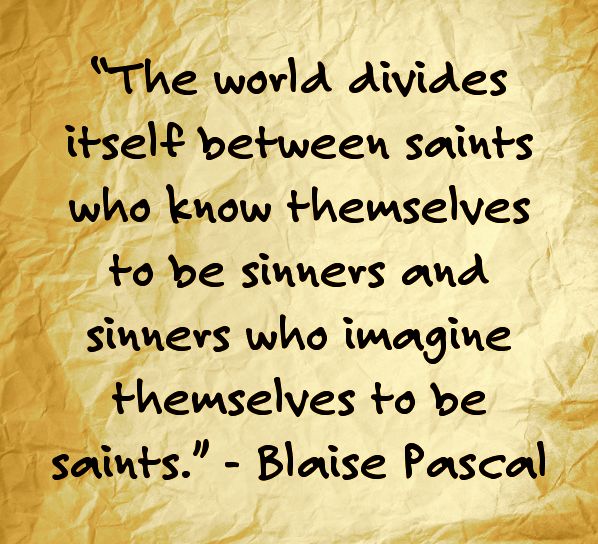
Author: Brian Legate
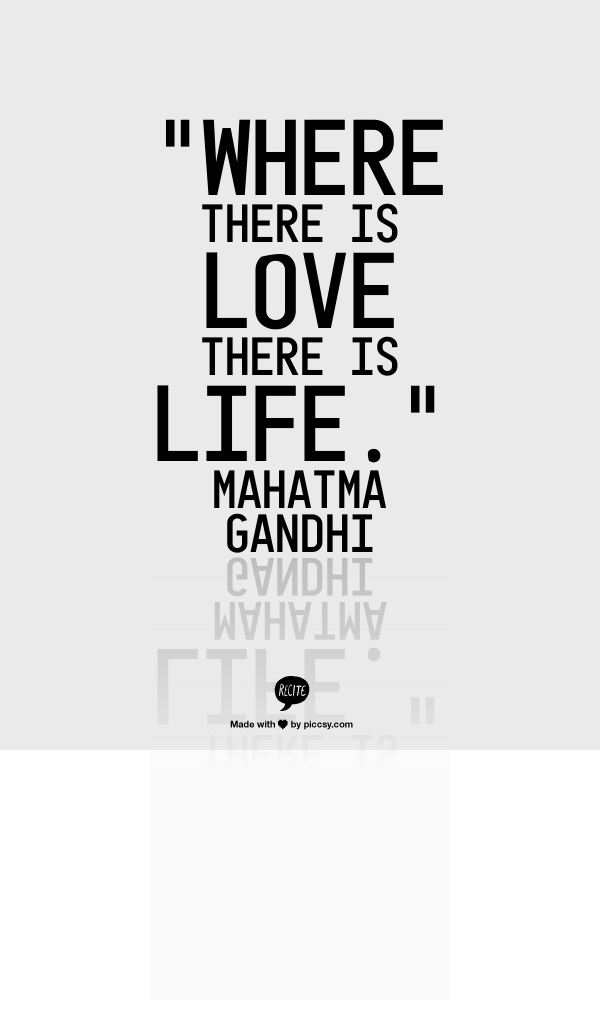
“Where there is love there is life.” Mahatma Gandhi
HOPE

Courtesy of UMCOR – United Methodist Committee on Relief
Shane Koyczan:
What We Talk About When We Talk About God by Rob Bell
New Book Release Trailer
Stop. Praying. – Dr. R. Scott Colglazier
What a blessing it was to discover the writings of Dr. Colglazier. Shortly after the first of the year, my Mother asked for assistance in getting signed up for his blog. She explained that my Father would print out entries from the “Take a BREATH” blog while he was still living on this side of life. Reading from my Father’s favorite theologians gives me comfort. While most of Dr. Colglazier’s entries have spoken to me – this is one of my favorites. I hope you find meaning in it as well. Peace be with you.
_______________________________________________________
February 21, 2013
A little suggestion . . . for a week or so forget about saying prayers or praying for others or praying for yourself or praying for world peace or even sending prayers of thanksgiving up into the sky and straight to the heart of God.
Instead, consider for a few days that how you treat other people is a kind of prayer. In fact, a real prayer to God. That the prayer you live is more powerful than the prayer you pray, and how you treat others is more revealing than any composition of words you call prayer.
If you feel grateful for another human being, then show them, tell them, and affirm their worth to you. If you’re grateful to God for the gift of life, then make life better for another person, including living with a little more joy yourself. If you care about the broken, the hungry or the hurting of this world, instead of saying a prayer about it, find a broken or hungry or hurting person and help them. Instead of praying to God about forgiveness, forgive someone. Instead of praying for someone in the hospital, go and visit them or send them a note.
Take a Breath today. The inclination to pray is such a good one, and I find myself praying more and more these days, but there are many ways of praying. Not the least of which is becoming more aware of how we treat others.
“Meaning is not something found, or sought; it is something experienced along the way if one is fully flung into the matter.” James Hollis
“Out of the Question” – By David Wilcox
Case closed. I was certain in my youth
God knows, I had my scientific proof
In my mind, I thought I saw the truth
Never looked beyond my lenses; never saw that it was you
Out of the question
So the answer I could never see
Out of the question
I look for you and you find me
Out of the question
You’re closer than the air I breath
But out of the question
And into the mystery
My heart – brings me to my knees
There’s God: the forest for the trees
Move me, like the wind will stir the leaves
I give way to the mystery like the branches in the breeze and I’m...
Out of the question
Catch the wind inside my fist? No it’s
Out of the question
Try to trap you and I know I’ve missed
Out of the question
The place you will always be, is
Out of the question
And into the mystery
Truth is there for finding, but the logic that’s involved
is a mystery unwinding, not a problem to be solved
Out of the question
I look for You, and You find me
Out of the question
In truth you will always be
Out of the question
You’re closer than the air I breath
Out of the question... and Into the mystery!
© David Wilcox, all rights reserved
Here is an outstanding cover version of this song on YouTube –
Wise words by Steve Jobs shortly after his first battle with cancer. Found at the end of his famous Stanford University commencement address. Full speech on YouTube: http://youtu.be/D1R-jKKp3NA

“Loving Your Enemies” – Dr. Martin Luther King
“Loving Your Enemies.” It’s so basic to me because it is a part of my basic philosophical and theological orientation: the whole idea of love, the whole philosophy of love. In the fifth chapter of the gospel as recorded by Saint Matthew, we read these very arresting words, flowing from the lips of our Lord and Master: ‘Ye have heard that it has been said, ‘Thou shall love thy neighbor, and hate thine enemy.’ But I say unto you, love your enemies, bless them that curse you, do good to them that hate you, and pray for them that despitefully use you, that ye may be the children of your Father which is in heaven.”
And if you go to Washington, you will discover that one of the greatest words or statements ever made about Abraham Lincoln was made by this man Stanton. And as Abraham Lincoln came to the end of his life, Stanton stood up and said, “Now he belongs to the ages.” He made a beautiful statement concerning the character and the stature of this man. If Abraham Lincoln had hated Stanton, if Abraham Lincoln had answered everything Stanton said, Abraham Lincoln would have not transformed and redeemed Stanton. Stanton would have gone to his grave hating Lincoln, and Lincoln would have gone to his grave hating Stanton. But through the power of love, Abraham Lincoln was able to redeem Stanton. That’s it. There is a power in love that our world has not discovered yet. Jesus discovered it centuries ago. Mahatma Gandhi of India discovered it a few years ago, but most men and most women never discover it. For they believe in hitting for hitting; they believe in an eye for an eye, and a tooth for a tooth; they believe in hating for hating. But Jesus comes to us and says, “This isn’t the way.”
It seems to me that this is the only way. As our eyes look to the future, as we look out across the years and across the generations, let us develop and move right here. We must discover the power of love, the power, the redemptive power of love. And when we discover that, we will be able to make of this old world a new world. We will be able to make men better. Love is the only way. Jesus discovered that.
Not only did Jesus discover it, even great military leaders discover that. One day as Napoleon came toward the end of his career and looked back across the years, the great Napoleon that at a very early age had all but conquered the world. He was not stopped until he became, till he moved out to the battle of Leipzig and then to Waterloo. But that same Napoleon one day stood back and looked across the years, and said: “Alexander, Caesar, Charlemagne, and I have built great empires, but upon what did they depend? They depended upon force. But long ago, Jesus started an empire that depended on love, and even to this day millions will die for him.”
Yes, I can see Jesus walking around the hills and the valleys of Palestine. And I can see him looking out at the Roman Empire with all of her fascinating and intricate military machinery. But in the midst of that, I can hear him saying: “I will not use this method. Neither will I hate the Roman Empire.”
So this morning, as I look into your eyes, and into the eyes of all of my brothers in Alabama and all over America and over the world, I say to you, “I love you. I would rather die than hate you.” And I am foolish enough to believe that through the power of this love somewhere men of the most recalcitrant bent will be transformed. And then we will be in God’s kingdom. We will be able to matriculate into the university of eternal life because we had the power to love our enemies, to bless those persons that cursed us, to even decide to be good to those persons who hated us, and we even prayed for those persons who despitefully used us.
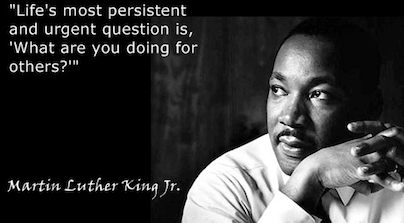
…Full Sermon Transcript – https://www.evernote.com/shard/s47/sh/2dcfe7de-b8cf-4444-aba0-83d397344be3/00d772a2afb5f5323dec63faadf837d5
 The Blessed Fool