The Radical Freedom of Being Chosen


Called and Sent

We live in a world obsessed with worthiness. From the resumes we build to the curated versions of our lives we post online, we are constantly trying to prove that we belong, that we matter, and that we’ve earned our spot at the table.

But what if the most important invitation you will ever receive has absolutely nothing to do with your qualifications?

In a recent daily meditation from the Center for Action and Contemplation, Father Richard Rohr unpacks a beautiful, challenging truth from the Apostle Paul’s writings in Romans: God’s chosenness is definitive, irrevocable, and entirely unearned.

The Trap of the “Tit-for-Tat” Mind

Most of us carry a transactional mindset into our spiritual lives. We think, If I pray enough, behave well enough, or believe correctly enough, then God will choose me.

Father Richard beautifully dismantles this:

“God’s choice has to do with God alone, not with us being worthy or ready. No one is ever ready! In fact, the readiness comes from experiencing and surrendering to the chosenness.”

The biblical narrative is packed with proof of this. God consistently bypasses the powerful, the put-together, and the self-righteous. Instead, God chooses the weak, the broken, and the deeply flawed. Why? Because it keeps us humble. It reminds us that when we love others well, it isn’t our own finite strength doing the heavy lifting—it’s God working through us as raw instruments.

From “Elitism” to Overflowing Mercy

When religion stops at the first stage, it becomes dangerous. It’s easy to fall into the trap of elitism—believing we are the chosen ones, we have it right, and everyone else is out. Father Richard warns that without a real, transforming love relationship with God, religion becomes a petty sideshow for exclusivity.

True chosenness doesn’t make you feel superior; it makes you feel deeply, wonderfully small in the wake of an overwhelming ocean of mercy.

We are chosen for one primary reason: to know what it feels like to be God’s beloved.

Once you let yourself be gazed upon by God with total, unconditional acceptance, something shifts. You realize you can never love God back perfectly, and that beautiful gap keeps you hungry, longing, and humble.

The Ultimate Destination: Everyone

The most radical part of the divine mystery is where it’s all heading. While the biblical story begins with the chosenness of a few, it always moves toward an egalitarian reality: everyone is chosen.

You cannot give away what you haven’t received. The only people who can authentically communicate the boundless, inclusive abundance of God to a fractured world are those who have first let themselves experience that abundance within their own hearts.


Reflection Questions for the Week:

  • Where are you still trying to “earn” God’s love or validation?
  • How can you shift from a transactional “tit-for-tat” faith to a faith of pure surrender this week?
  • Who in your life needs to be reminded that they, too, are beautifully held and chosen by God?

What are your thoughts on this meditation? Let’s discuss in the comments below!

Finding Love in the Fray: Redefining a “Text of Terror” on Father’s Day


We’ve all experienced moments where a specific piece of text, a song, or a memory triggers a wave of discomfort. For many churchgoers, Matthew 10:24-39—the lectionary reading that unexpectedly lands on Father’s Day—is exactly that. On the surface, it paints a jarring picture of a Jesus who brings a sword to divide families.

In her latest Sunday Musings, Diana Butler Bass wrestles honestly with this difficult passage, sharing how she moved past her own spiritual triggers to find an unexpected message of profound hope.

Key Takeaways from the Article:

  • The Weight of Bad Theology: Bass recalls hearing this passage at age 15 in a fundamentalist church, where it was preached as a threat that “unbelieving” parents would go to hell. This colonized her spiritual imagination with fear for decades, illustrating how toxic interpretations can become deeply embedded spiritual earworms.
  • The Reality of Modern Division: The passage hits incredibly close to home today. Bass connects the scriptural text of familial separation to modern realities: a 2024 study showing 26% of American adults are estranged from parents, the rise of controlling religious movements, and her own painful 9-year estrangement from her brother due to political divisions.
  • “Reading for Surprise”: To break through her resistance to the text, Bass utilizes a hermeneutic practice she taught her church history students: approaching the text simply asking, “What most surprises me here?”
  • A Shift from Threat to Promise: By looking past the institutional clutter, she noticed a repeating refrain she had previously missed: “So have no fear… Do not fear… So do not be afraid.” Rather than a threat of condemnation, the text acts as a condolence. It acknowledges that while living out truth and compassion will inevitably cause friction with a broken world, we are deeply cherished and held by God’s love through the upheaval.
  • Love as the Only Way Through: In a world where religious abuse, family estrangement, and political polarization seem to be worsening, Bass concludes that Jesus wasn’t approving of division, but describing human reality. Ultimately, the call is to lean into a self-giving love that is stronger than our deepest divides.

“Life may be frightening — and the work of compassion hard — but know that God cherishes you in the midst of the upheaval. You. Are. Beloved.”

Read the full SubStack article at: https://open.substack.com/pub/dianabutlerbass/p/sunday-musings-7a4?r=45tsh&utm_campaign=post-expanded-share&utm_medium=web


#Faith #Spirituality #DianaButlerBass #BiblicalInterpretation #Deconstruction #Healing #FamilyDivision #SundayMusings #GospelOfMatthew

Practicing Gratitude: A Path to Rewiring Our Minds

In the November 28, 2025, edition of Richard Rohr’s Daily Meditations, the spiritual practice of gratitude is highlighted through the lens of psychological and spiritual growth. The meditation — titled “Minding Positivity” — makes a startling claim: our brains may be wired to cling to negativity. Like Velcro, we instinctively hold on to problems, fears, and regrets, while letting positive experiences slip away like cheese on hot Teflon. 

This tendency — to dwell on what’s wrong rather than celebrate what’s good — can shape how we view ourselves, our lives, and the world. But Rohr draws on neuroscience (notably the work of Rick Hanson) to show that the brain is malleable: by consciously choosing to hold onto positives for at least fifteen seconds, we can recondition our minds. 

In other words: gratitude isn’t optional. It’s a spiritual discipline. By repeatedly turning toward love, trust, patience, and goodness — even in small moments — we gradually build “neuroplasticity”: an increased bandwidth for freedom, openness, and compassion. Rohr frames this rewiring as the very heart of authentic spirituality. 


Why This Matters More Than Ever

  • We live in a negativity-saturated world. Between media cycles, social pressure, and personal anxieties, it’s easy to let negativity dominate our inner narrative. This meditation cuts directly across that tendency.
  • Spirituality isn’t just about morality — it’s about psychology. By linking contemplative practices to brain science, the text bridges faith and neuroscience. Gratitude becomes a practical, embodied discipline.
  • Small shifts can lead to profound transformation. You don’t need great insight or dramatic experiences — just small, regular conscious choices to linger in gratitude. Over time, that can change how you see yourself, others, and your place in the world.

Key Takeaways and Invitation

  • Start simple: notice one small good thing today and hold on to it, mentally or in a journal, for at least 15 seconds.
  • When negativity or fear arises, gently reorient to something authentic, lovely, or kind — even if it feels small or insignificant.
  • See gratitude not as a passing “positive vibe,” but as a spiritual and neurological discipline: a way to expand your capacity for love, acceptance, and presence.
  • Recognize that this kind of transformation — from fear to trust, from reactivity to stillness — is not optional or secondary. It’s essential.

Source: Minding Positivity – Richard Rohr – https://email.cac.org/t/d-e-gjulhtt-tlkrhtkhkt-e/

Welcoming the Stranger

A Biblical Command

Father Richard Rohr invites us to consider how well we love others, especially the stranger, as Jesus teaches:  

If our love of God doesn’t directly influence, and even change, how we engage in the issues of our time, I wonder what good religion is. “God talk” becomes an opaque screen in which we see only reflections of ourselves, rather than any kind of true light. “Anyone who says they love God, and hates their brother or sister, is a liar” (1 John 4:20). None of us wants to be a liar, yet religion’s high goals make failure almost inevitable for all of us (read Paul’s attempts to describe this paradoxical phenomenon in Romans 7:7–25). Our daily question is this: “Have I even begun to love?” 

Most Christians tend to echo the cultural prejudices and worldviews of the dominant group in their country, with only a minority revealing any real transformation of attitudes or consciousness. It has been true of slavery and racism, classism and consumerism, and issues of immigration and health care for the poor. From a religion based on a man who was always healing poor people and praising foreigners, it defies any logical analysis! 

One would think that people who insist they believe in one God would understand that everyone on Earth is equally a child of that one God. Christians ought to be first in line to cross artificial boundaries created by nation states, class systems, cultures, and even religions. Often, we’re the last! It makes one wonder if we believe what we say we believe. Religion too often becomes the way to defend the self instead of the way to “let go of the self” as Jesus forthrightly taught (see Luke 9:23). [1] 

Pope Francis reminds Christians of their duty to welcome the stranger:  

Let us concentrate on these words of Jesus: “I was a stranger and you welcomed me, I was naked and you clothed me” (Matthew 25:35–36). In our time, charitable action regarding foreigners is more relevant than ever. The economic crisis, armed conflicts, and climate change have forced many people to emigrate. However, migration is not a new phenomenon; it is part of the history of humanity. It is a lack of historical memory to think that this phenomenon has arisen only in recent years…. 

At times it seems that the silent work of so many men and women who, in various ways, do all they can to help and assist the refugees and migrants is obscured by the clamor of others who give voice to an instinctive selfishness. However, closure is not a solution, but instead ends up fostering criminal trafficking. The only path to a solution is through solidarity. Solidarity with the migrant, solidarity with the foreigner….  

We all … are called to welcome our brothers and sisters who are fleeing from war, from hunger, from violence and from inhuman living conditions. All together we are a great supportive force for those who have lost their homelands, families, work, and dignity. [2] 

[1] Adapted from Richard Rohr, “We Have Not Yet Begun to Love: Religion and Immigration,” Radical Grace 24, no. 4 (2011): 3. 

[2] Pope Francis, “A Stranger and You Welcomed Me,” in A Stranger and You Welcomed Me: A Call to Mercy and Solidarity with Migrants and Refugees, ed. Robert Ellsberg (Orbis, 2018), 53, 54, 55.  

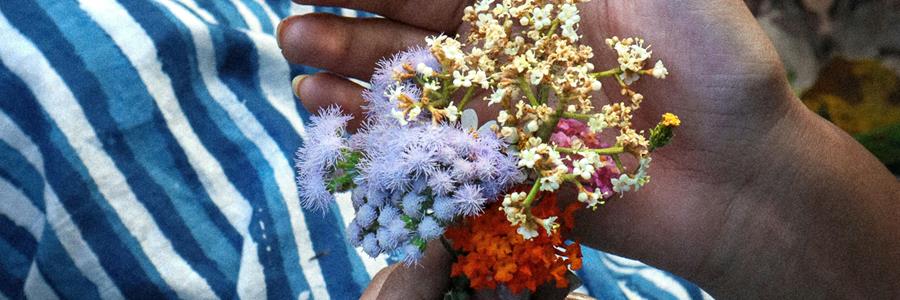
Image credit and inspiration: Lucas Dalamarta, Untitled (detail), 2024, photo, UnsplashClick here to enlarge image. When engaging with an unknown being we practice holding space for the other and leading with an open heart, even when we don’t know the outcome. 

Shared by Center for Action and Contemplation – Daily Meditations – Join for free.